
Wellness · October 24, 2026
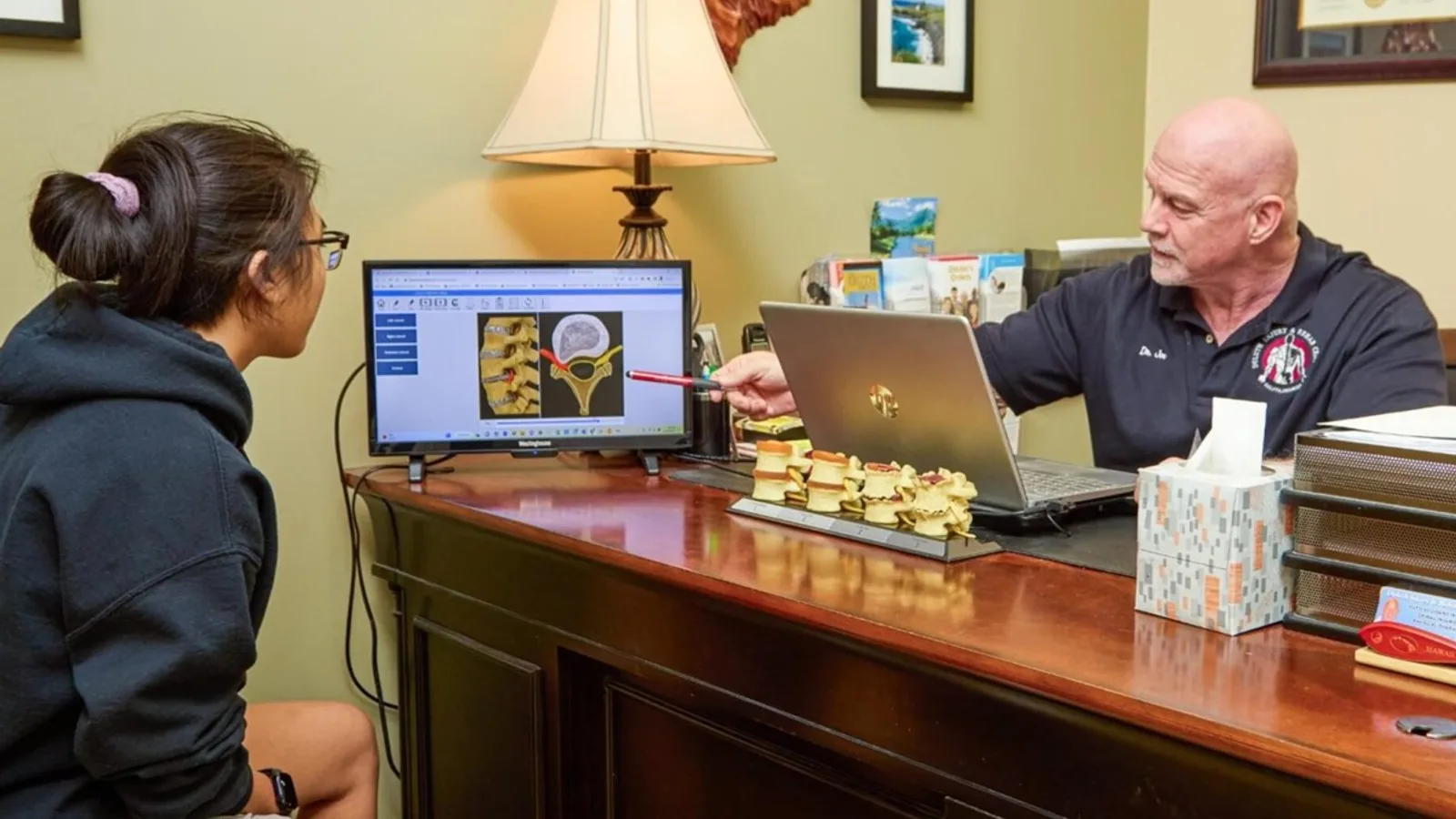
Most people don't think much about how they're sitting right now. But the way you hold your body today — at your desk, on your couch, scrolling through your phone — is quietly making deposits into an account you'll have to reckon with years from now. Poor posture is one of those slow-burn problems that doesn't announce itself loudly at first. Instead, it builds gradually, and by the time it becomes painful or limiting, the damage has often been accumulating for years. At Hans Chiropractic & Injury Center in Norcross, GA, Dr. Joe Hans sees this pattern regularly — patients who come in wondering why their neck aches, their back stiffens up, or their energy is low, and who are surprised to learn that their posture has been a contributing factor all along.
What is the long-term cost of poor posture? Poor posture refers to habitual body positioning that places unnecessary stress on your spine, muscles, and joints. Over time, this stress compounds — leading to structural changes, chronic pain, reduced mobility, and even effects on your breathing and mood. The consequences often don't surface until middle age or later, which is why understanding the problem early matters so much.
What Poor Posture Really Means
When most people picture bad posture, they imagine someone hunched dramatically over a desk. But poor posture is far more nuanced than that. It's the slightly forward head position you hold while watching TV. It's the way you favor one hip while standing in line. It's the rounded shoulders you've had so long you don't even notice them anymore. Posture is essentially the relationship between your body segments — how your head, neck, shoulders, spine, hips, and feet are aligned relative to each other and to gravity.
Good posture distributes the mechanical load of your body evenly across your skeletal system. When alignment is off — even by a little — certain muscles, joints, and spinal discs have to absorb more stress than they were designed to handle. Over days, months, and years, that excess stress adds up. Dr. Joe Hans often explains it this way: your body is remarkably adaptable, but adaptation has a cost. When your muscles and joints adapt to a misaligned position, they begin to remodel around that position — and undoing that remodeling takes intentional, consistent effort.
Here in Norcross, GA, many patients sit for long hours in cars commuting, work desk jobs, or spend significant time on devices. These are all common contributors to the kinds of postural habits that don't feel problematic today but lay the groundwork for real issues later in life.
How Poor Posture Quietly Damages Your Body Over Time
The most insidious part of poor posture is how gradually it causes harm. There's rarely a single moment where you "break" something. Instead, your body changes slowly — muscles shorten, others weaken, spinal curves shift, and joints begin to wear unevenly. By the time symptoms appear, the underlying changes have usually been building for quite a while.
One of the most well-documented mechanisms is what happens to your spinal discs under prolonged poor posture. The discs between your vertebrae act as shock absorbers. They rely on movement and proper loading to receive nutrients, since they don't have a direct blood supply in adulthood. Sustained poor positioning — like slumping for hours at a desk — can gradually alter disc hydration and increase the risk of disc degeneration over time. This is a slow process, but it's one that research in musculoskeletal health has linked to chronic low back and neck pain in later years.
Muscles tell a similar story. When you spend hours in a forward-head position, for example, the muscles at the back of your neck and upper back are forced to work much harder than they should. Over time, they become overworked and tight. Meanwhile, the muscles at the front of your neck and chest — which should provide balance — tend to shorten and weaken. This muscle imbalance doesn't just cause discomfort. It becomes the new default, and the body starts to reinforce it structurally. At Hans Chiropractic & Injury Center, Dr. Joe Hans addresses these imbalances as a core part of postural care, working to restore balance before it becomes a long-term limitation.
Joint degeneration is another silent consequence. When joints in the spine and elsewhere are consistently loaded unevenly, the cartilage and surrounding tissue wear down in predictable patterns. This is one reason why arthritis in the spine — while a natural part of aging — tends to progress faster in people with chronic postural imbalances. The joints simply experience more wear on one side or in one region than they were built to tolerate.
Effects That Go Beyond Back Pain
Many people are surprised to learn that the consequences of poor posture extend well beyond aching muscles and a stiff back. The body is deeply interconnected, and when your spinal alignment is compromised, the ripple effects can touch several systems.
Breathing is one notable area. Research suggests that a forward-head and rounded-shoulder posture can reduce the ability of the ribcage to fully expand during inhalation. Over time, this can contribute to shallow breathing patterns, which affect oxygen delivery, energy levels, and even stress regulation. This isn't often something patients connect to posture, but it's a relationship that body mechanics researchers have examined.
Nerve function is another area of concern. The spine houses and protects the spinal cord, and nerves exit the spine at each vertebral level. When spinal alignment shifts due to long-standing postural changes, it can create areas of increased pressure or reduced space for nerves. This may contribute to symptoms like tingling, numbness, or weakness in the arms and legs — symptoms that might not show up for years after the postural problem began.
There's also a growing body of evidence suggesting a relationship between posture and mood. While it's not a direct cause-and-effect relationship, studies have explored how body language and physical positioning can influence the nervous system and psychological state. Patients at Hans Chiropractic & Injury Center in Norcross, GA sometimes report improvements in their overall energy and sense of wellbeing as their posture improves — a connection worth noting, even if the science is still developing.
How Chiropractic Care Addresses Postural Problems
Chiropractic care is particularly well-suited for addressing the musculoskeletal consequences of poor posture. It's non-invasive, drug-free, and focused on restoring function rather than simply masking symptoms. At Hans Chiropractic & Injury Center, Dr. Joe Hans takes a thorough, individualized approach — evaluating not just where a patient hurts, but how they're moving, holding themselves, and what postural patterns may be driving their discomfort.
Spinal adjustments are a core part of chiropractic care. They work to restore proper movement and alignment to vertebral segments that have become restricted or misaligned. When the spine is moving well and positioned correctly, the surrounding muscles, joints, and nerves function better. Evidence from organizations like the American Chiropractic Association and research published in peer-reviewed journals indicates that spinal manipulation can be an effective conservative approach for musculoskeletal pain — including the neck and back pain that often results from long-term postural stress.
Beyond adjustments, Dr. Joe Hans typically incorporates postural assessment, soft tissue work, and patient education into care plans. Understanding why your posture has developed the way it has — and what specific habits or structural changes are driving it — empowers patients to participate actively in their own recovery. This educational component is something the team at Hans Chiropractic & Injury Center in Norcross, GA considers essential, not optional.
It's also worth noting that chiropractic care is most effective when started early. The longer postural imbalances have been present, the more the body has adapted around them — and the more work is required to retrain those patterns. This is why Dr. Joe Hans encourages patients not to wait until pain becomes severe before seeking an evaluation.
Practical Tips for Better Posture Starting Today
Improving posture isn't about forcing your body into a rigid "perfect" position and holding it there. That approach is exhausting and unsustainable. Instead, it's about creating better habits, building supportive strength, and reducing the cumulative load your body has to deal with over the course of each day.
One of the most impactful changes you can make is managing how long you stay in any single position. The human body is designed for movement. Sitting for 60 minutes is very different from sitting for 60 minutes with brief movement breaks every 20 to 30 minutes. Setting a simple timer and doing a short walk or some gentle movement can significantly reduce the compressive forces on your spine throughout the day.
Your workstation setup matters enormously. Your monitor should be at eye level — not below it — so your head doesn't drift forward to see the screen. Your feet should rest flat on the floor, your knees should be roughly level with your hips, and your lower back should have gentle support. Small ergonomic adjustments can make a real difference in the postural load you accumulate over months and years.
Strengthening your core and the muscles that support the spine is also key. When the deep stabilizing muscles of the trunk are strong, they share the load that would otherwise fall on passive structures like discs and ligaments. You don't need an intense workout program — consistent, low-impact exercise that includes core engagement goes a long way.
Finally, be mindful of your phone habits. "Tech neck" — the forward-head posture that develops from looking down at devices — is a growing concern, especially among younger people. Raising your phone to eye level rather than dropping your chin to meet it is a small habit change with meaningful long-term benefits.
When to See a Chiropractor About Your Posture
You don't have to be in severe pain to benefit from a chiropractic evaluation. In fact, one of the best reasons to visit Hans Chiropractic & Injury Center in Norcross, GA is before significant pain develops — when postural patterns are easier to address and the structural changes are less entrenched.
That said, there are specific signs that suggest your posture may be actively causing harm and that it's time to seek professional evaluation. Recurring or persistent neck and back pain that doesn't resolve with rest is a clear indicator. So is stiffness in the morning that takes a while to work out, headaches that seem to originate at the base of the skull, or a noticeable difference in shoulder or hip height when you look in the mirror.
There are also red flags that go beyond chiropractic scope and should prompt a visit to your medical doctor promptly. These include sudden severe pain, numbness or weakness that came on suddenly, pain that radiates down the arm or leg with significant loss of function, or any loss of bladder or bowel control. These symptoms can indicate a serious underlying issue and require immediate medical evaluation.
Posture Habits: What You're Doing vs. What Helps
Common Postural Habit | What It's Doing to Your Body | What Helps Instead |
|---|---|---|
Looking down at your phone for extended periods | Increases load on the cervical spine; can lead to forward head posture and neck strain | Raise your device to eye level; take breaks every 20-30 minutes |
Sitting with a rounded lower back | Increases pressure on lumbar discs; weakens core stabilizers over time | Use lumbar support; engage core lightly; sit with hips slightly higher than knees |
Crossing your legs while seated | Creates pelvic imbalance and uneven load on the hips and lower spine | Keep both feet flat on the floor; shift positions regularly |
Sleeping on your stomach | Forces the neck into sustained rotation; increases cervical and lumbar strain | Sleep on your back or side with appropriate pillow support |
Carrying a bag on one shoulder | Creates shoulder and spinal asymmetry; strains the neck and upper back on one side | Use a backpack with both straps or switch sides frequently |
Myths vs. Facts About Poor Posture
Myth: Poor posture only causes back pain.
Fact: Poor posture can contribute to a wide range of issues beyond back pain, including headaches, reduced lung capacity, nerve-related symptoms, jaw tension, hip imbalances, and even changes in mood and energy. The spine is central to the entire body's function, so misalignment affects far more than just the back.
Myth: If you don't have pain, your posture is fine.
Fact: The absence of pain does not mean the absence of a problem. Many structural changes — including disc degeneration and joint asymmetry — develop silently for years before symptoms appear. This is one of the key reasons Dr. Joe Hans recommends postural evaluations even for patients who feel relatively well.
Myth: You can fix your posture quickly with a few exercises.
Fact: Postural correction is a gradual process that involves retraining muscles, restoring joint mobility, and developing new movement habits. For patterns that have been present for years, meaningful improvement typically takes consistent effort over weeks to months. Exercises help, but professional guidance makes the process more targeted and effective.
Myth: Poor posture is just a cosmetic issue.
Fact: Posture has real physiological consequences. It affects how forces are distributed through your joints and discs, how well your nerves function, how efficiently you breathe, and how quickly your musculoskeletal structures wear down. Dismissing it as purely cosmetic means missing a genuine health opportunity.
Myth: Children and young adults don't need to worry about posture yet.
Fact: Postural habits formed in childhood and young adulthood often determine the structural realities of middle and later life. The earlier good habits are established — and the earlier poor ones are corrected — the better the long-term outcome. Hans Chiropractic & Injury Center in Norcross, GA sees patients across all age groups for exactly this reason.
Final Thoughts from Hans Chiropractic & Injury Center
The cost of poor posture isn't always visible in the moment. It tends to accumulate quietly, over years and decades, until one day it makes itself impossible to ignore. The good news is that the body is remarkably resilient, and with the right awareness, habits, and professional support, the trajectory can absolutely change.
At Hans Chiropractic & Injury Center in Norcross, GA, Dr. Joe Hans is passionate about helping the local community understand these connections before they become painful limitations. Whether you're dealing with current discomfort that you suspect is posture-related, or you simply want to get ahead of potential problems down the road, a thorough chiropractic evaluation can provide real clarity about where your body stands and what steps make sense for you.
You don't have to wait until something breaks down to take your posture seriously. The best time to address it was years ago. The second-best time is today. The team at Hans Chiropractic & Injury Center is here to help the Norcross community move better, feel better, and build the kind of structural health that supports a full and active life for years to come.
Frequently Asked Questions
Can chiropractic care actually improve my posture?
Yes, chiropractic care can be an effective part of a postural improvement plan. By addressing spinal restrictions, muscle imbalances, and movement limitations, chiropractic adjustments and associated therapies help restore the alignment and mobility needed for better posture over time. It typically works best when combined with patient education and consistent home habits.
How long does it take to see improvement in posture with chiropractic care?
The timeline varies depending on how long the postural patterns have been present and the individual's overall health and consistency. Some patients notice meaningful improvements in a few weeks, while others with long-standing postural changes may take several months of consistent care to see significant results. Dr. Joe Hans develops individualized care plans to set realistic expectations from the start.
Is poor posture really linked to headaches?
Yes, there is a well-recognized connection between cervicogenic headaches — headaches that originate from the neck — and postural factors like forward head position and upper cervical joint restriction. When the muscles and joints of the neck are under chronic stress from poor posture, headache patterns can develop or worsen over time.
At what age does poor posture start causing serious problems?
There's no single age threshold, but many patients begin noticing significant symptoms related to long-standing postural habits in their 30s, 40s, and 50s. However, the structural changes begin much earlier. That's why Hans Chiropractic & Injury Center in Norcross, GA emphasizes postural awareness at every age, not just when pain appears.
Can I fix my posture on my own, or do I need professional help?
Mild postural habits can often be improved with consistent self-care, ergonomic adjustments, and appropriate exercise. However, if you have significant or long-standing postural imbalances, professional evaluation helps identify the specific structural changes and muscle patterns at play — making your self-care efforts far more targeted and effective.
Is sitting or standing worse for posture?
Neither is inherently worse — the real culprit is staying in any single position for too long. Both prolonged sitting and prolonged static standing can contribute to postural fatigue and joint stress. The key is frequent position changes, movement breaks, and proper alignment in whatever position you're in.
TL;DR
Poor posture accumulates damage slowly and silently — often for years before symptoms appear, which is why early awareness and action matter so much.
The long-term consequences go beyond back pain and can include disc degeneration, joint wear, nerve-related symptoms, reduced breathing capacity, and even effects on mood and energy.
Chiropractic care from Dr. Joe Hans at Hans Chiropractic & Injury Center in Norcross, GA addresses the root structural causes of postural problems through adjustments, soft tissue care, and patient education.
Simple daily habits — movement breaks, ergonomic workstation setup, mindful device use, and core strengthening — can significantly reduce the postural load your body accumulates over time.
You don't have to wait for pain to seek an evaluation — proactive chiropractic care is one of the most effective ways to protect your structural health for the long term.